TMI Newsletter | Holiday 2023
Featured News
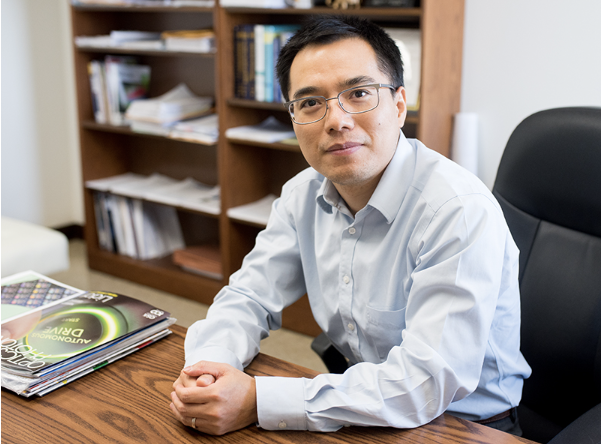
The Board of Directors of Optica, formerly OSA, Advancing Optics and Photonics Worldwide, recently elected 129 members from 26 countries to the Societys 2024 Fellow class, including our very own Dr. Yuebing Zheng. He was selected due to his years of work in pioneering contributions to nanophotonics and optical manipulation technologies.
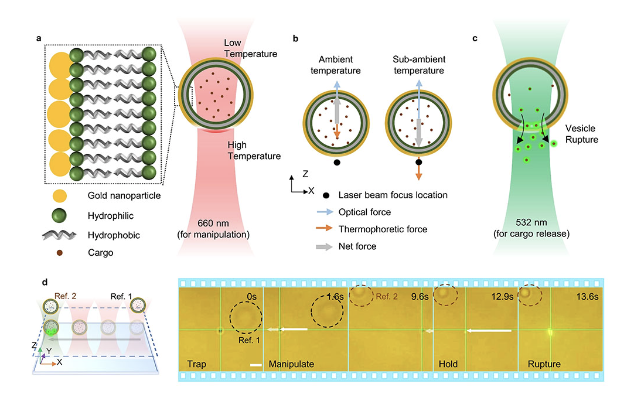
Researchers at the University of Texas at Austin have recently revolutionized biotechnological applications of optical tweezers to cell surgery and drug delivery areas. Dr. Yuebing Zheng, Associate Professor in the Walker Department of Mechanical Engineering and Graduate Advisor/Graduate Studies Committee Chair for the Materials Science and Engineering Graduate Program at Texas Materials institute, led the research recently published in Nature.
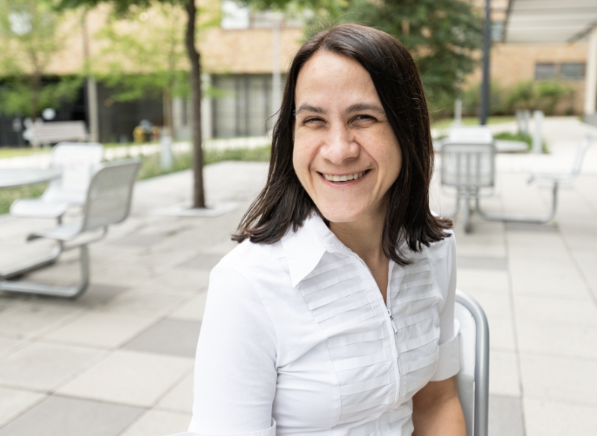
Dr. Milliron, Department Chair and Professor, from the McKetta Department of Chemical Engineering, receives the 2023 Materials Research Society Medal Award. She is being recognized for the "development of optically tunable metal oxide nanomaterials for applications such as energy-saving electrochromic windows."

Clarivate announces Highly Cited Researchers for 2023 which includes over very own: Deji Akinwande, Feliciano Guistino, Yuanyue Liu, Nanshu Lu, Allan MacDonald, Arumugam Manthiram, David Mitlin, Nicholas Peppas, Jonathan Sessler, and Guihua Yu.
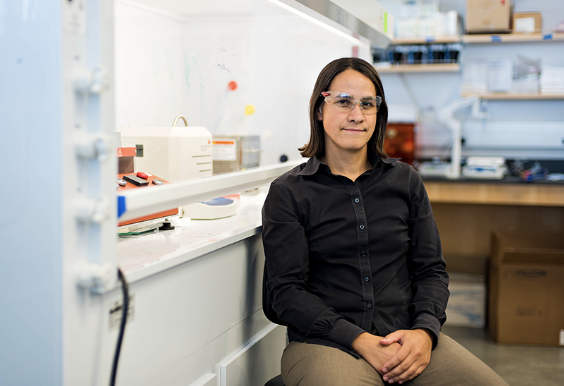
Department Chair and Professor from the McKetta Department of Chemical Engineering, Dr. Delia Milliron, receives 2023 NSEF Forum Award. This is in recognition for her outstanding contributions to the advancement of nanoscale science and engineering in the field of chemical engineering.
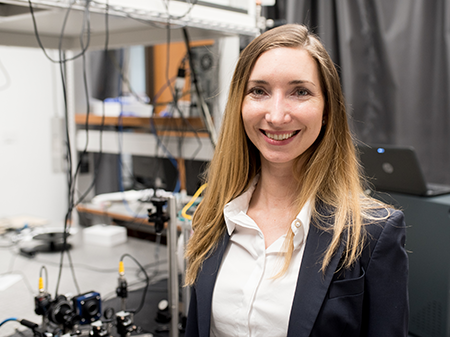
Applied Physics Letters introduced their first APL Rising Stars Collection and APL Rising Star Award to spotlight early career principal investigators making strides in applied physics. Dr. Incorvia, Associate Professor from Chandra Family Department of Electrical and Computer Engineering, was named the first recipient for the APL Rising Star award, recognizing her impactful contributions to the field.
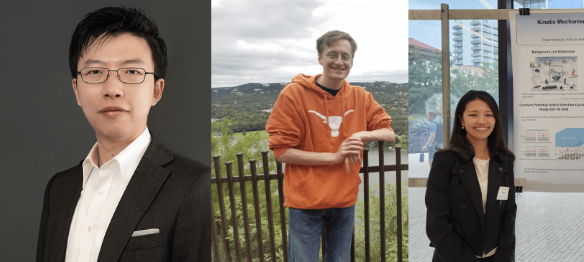
Scientists at Texas Materials Institute have uncovered a pivotal step in the oxygen reduction reaction (ORR) that is fundamental to various clean energy technologies. This work was recently published in Journal of the American Chemical Society by the American Chemical Society. This work was supported by the Welch Foundation, National Science Foundation, and ACS Petroleum Research Fund.
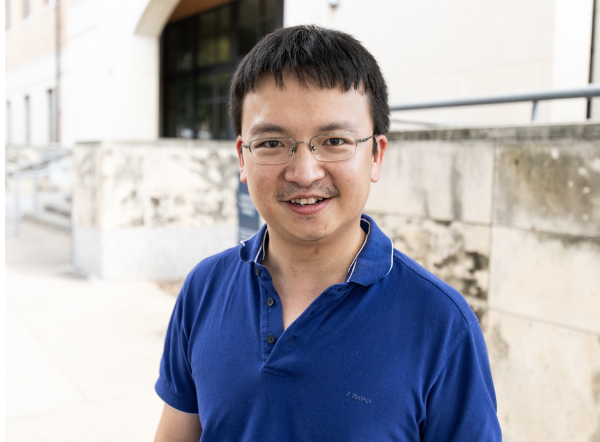
UT Austin's Biomedical Engineering researchers aim to improve EEG technology for sleep monitoring with innovative technology. Dr. Huiliang Wang from TMI, with co-authors, published in the journal Device. It details how their findings are breaking barriers and setting a new standard for brainwave recording.
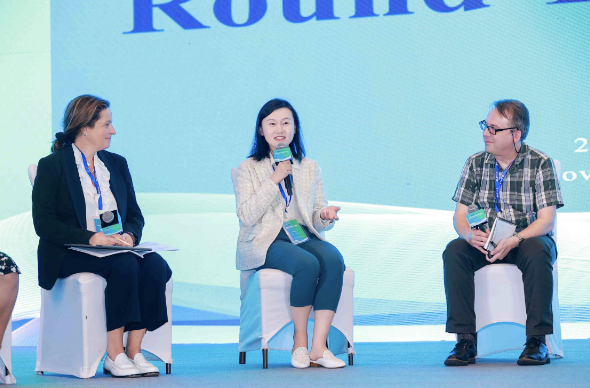
Dr. Nanshu Lu, a prominent researcher in the Aerospace Engineering and Engineering Mechanics Department and part of the affiliated faculty at TMI at UT Austin, gave a Tedx UTAustin talk titled "E-skins and e-tattos: Your Cybernetic Future."

In a momentous recognition of their groundbreaking contributions, Material Science and Engineering alumnus Abhay Gupta and Youhong Guo have both secured coveted spots on the esteemed 2023 Forbes '30 Under 30' list.
The National Academy of Inventors (NAI) has unveiled its 2023 Class of Fellows, featuring 162 academic inventors including our very own Dr. Arumugam Manthiram, a professor in the Walker Department of Mechanical Engineering and Texas Material Institute at the University of Texas at Austin.
Congratulations Fall 2023 MS&E Graduates!
Meet your TMI Faculty with Dr. Jin Yang!

Assistant Professor, Jin Yang, a recent addition to the Aerospace Engineering and Engineering Mechanics Department and Texas Materials Institute, is at the forefront of materials research, specializing in the experimental mechanics of viscoelastic materials. With a Ph.D. from the California Institute of Technology, Dr. Yang's work revolves around understanding dynamic instabilities, material failure, and the behavior of substances like hydrogels and biological tissues under varying strain-rate conditions. Leveraging cutting-edge techniques such as machine learning and data-driven methods, he enhances 2D and 3D full-field deformation measurements, employing digital image correlation and particle tracking.
Dr. Yang's distinguished career includes the development of adaptive-mesh augmented Lagrangian digital image/volume correlation methods during his graduate studies. As a postdoctoral research associate at the University of Wisconsin-Madison, he pioneered a micro-cavitation-based rheometry method to characterize viscoelastic properties at ultra-high strain rates. Recognizing his contributions, Dr. Yang received the Haythornthwaite Initiation Grant from the Applied Mechanics Division of the American Society of Mechanical Engineers in 2022, cementing his position as a rising star in the field of experimental mechanics.
What motivated you to become involved in Materials Science Engineering?
In our lab, we conduct laser-induced inertial cavitation experiments in soft gels mimicking biological tissues, which could aid in the treatment of laser eye surgery, breaking up kidney stones, and even understanding brain injuries, along with many other types of engineering applications where fluid-solid interaction resulting in cavitation collapse might cause irreversible material erosion. By investigating this problem, we aim to develop novel analytical tools and experimental techniques to study soft materials behavior and material failure under extreme loading conditions. These endeavors align closely with the research interests of other groups in Materials Science Engineering, fostering a strong motivation for collaboration and engagement within this vibrant academic community.
Describe the most memorable event or experience you’ve encountered in your career?
The most memorable and exciting experience in m career has been witnessing the dynamic growth of my laboratory, and seeing that my mentored students are excited about their research projects.
What is your favorite thing to do when you’re not working?
In my leisure time, you can find me in a gym lifting weights or jogging along the river. I also enjoy spending time with my family.
Upcoming Events & Announcements

Spring 2024 Academic Dates
- Spring 2024 Registration Opening: December 11-15; reopens January 10, 2024
- Spring 2024 Tuition Bill Deadline: January 08, 2024 at 5:00 p.m.
- First Day of Spring 2024: January 16, 2024